Stance
How you show up in your world — how you affect others, and the effect your contributions produce in the system.
Agility
Agility is the ability to adapt to the here and now without losing sight of the ultimate why. It's less about following an adaptive methodology and more about becoming an adaptive practitioner. The Four Dimensions help you balance the art and the science of change, and know when to shift your approach.
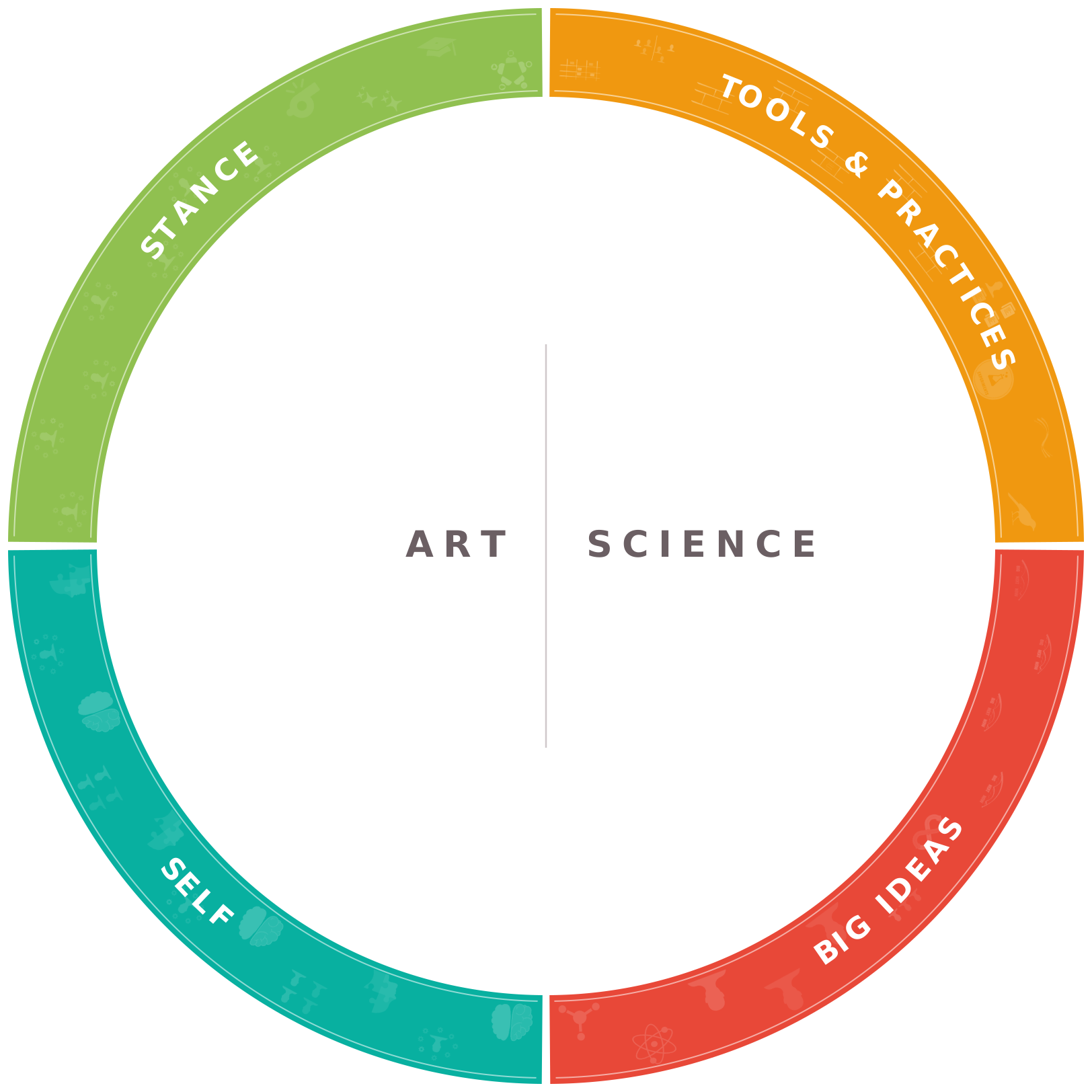

Where they sit in the operating system
The outer ring of the operating system. The Dimensions surround everything because the practitioner is the instrument through which all of it happens.
They shape everything inside them — how committed you are to the Five Universals, and how adept you are at running the Engine.
The Four Dimensions of Change emphasize the importance of personal development, the stance one takes in driving change, the mental models used to understand change, and the practical tools and practices employed. This model helps you balance the human aspects of change with effective methodologies to achieve impactful results.
Each of the dimensions has associated elements of change. These elements help you design a contextualized approach to change. Each element is carefully crafted across the four dimensions to help you make more conscious choices for how to facilitate change in your organization.
Intuition matters. Have you experienced the phenomenon where you just know it’s the right time to intervene in the organizational system? That’s art. Do you instinctively know when to ask powerful questions or give advice? That’s art.
How you show up in your world — how you affect others, and the effect your contributions produce in the system.
Who you are as a human: your beliefs, and how you see and interpret your world. Every experience, success, failure and interaction has shaped the human you are today.
We all have our favourite mental models, ideas, and tools. Some work well in some contexts and fail miserably in others. Like a good chemist, we can combine different elements to do different things. That’s science.
The tools that help us facilitate change — Change Canvases, Big Visible Walls, Perspective Maps and more.
The mental models we use to explore our world. These concepts help us describe complex change, so understanding them matters if we’re to be effective agents of change.
1 · The problem
“We find out too late that there are problems with the change…”
2 · Look at it through each Dimension
What does each Dimension notice about this problem?
3 · Choose an element of change
Choose from 100+ elements of change to match your context.
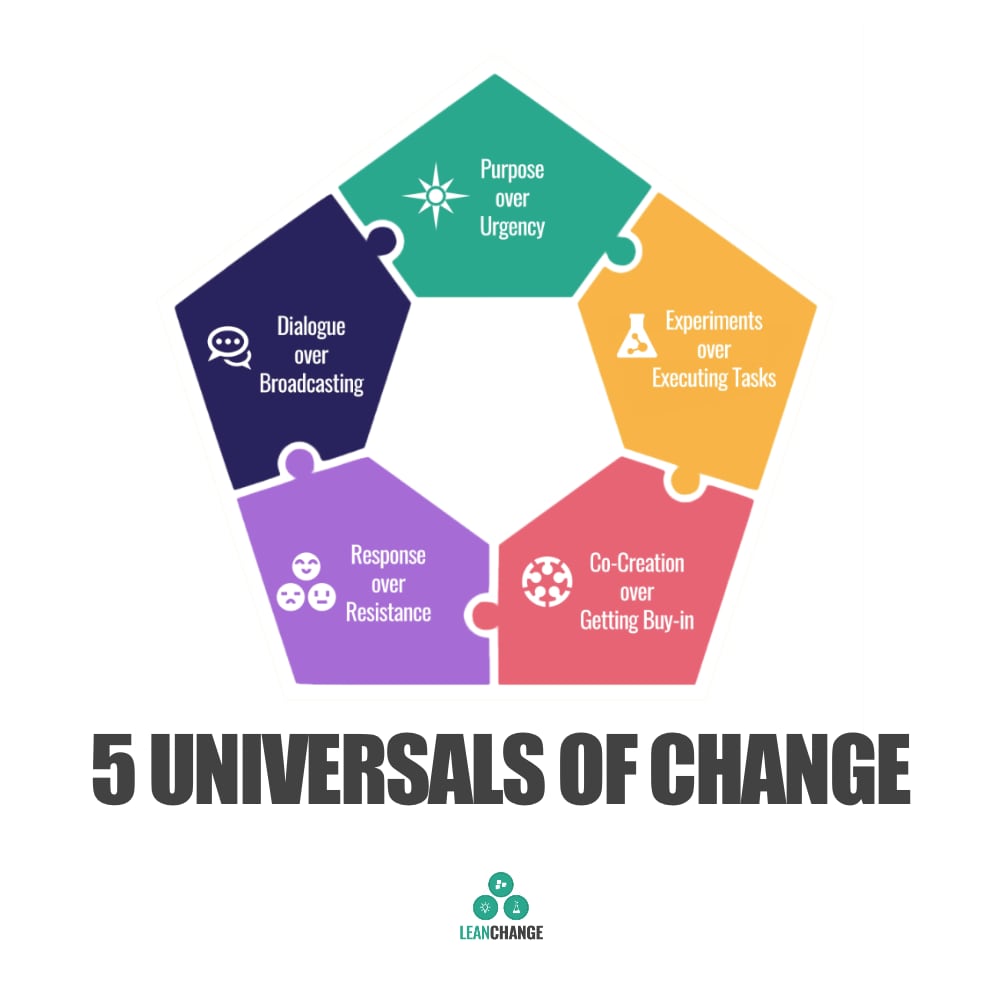 Stance5 Universals of Change“Maybe I should run small experiments instead of executing the plan.”
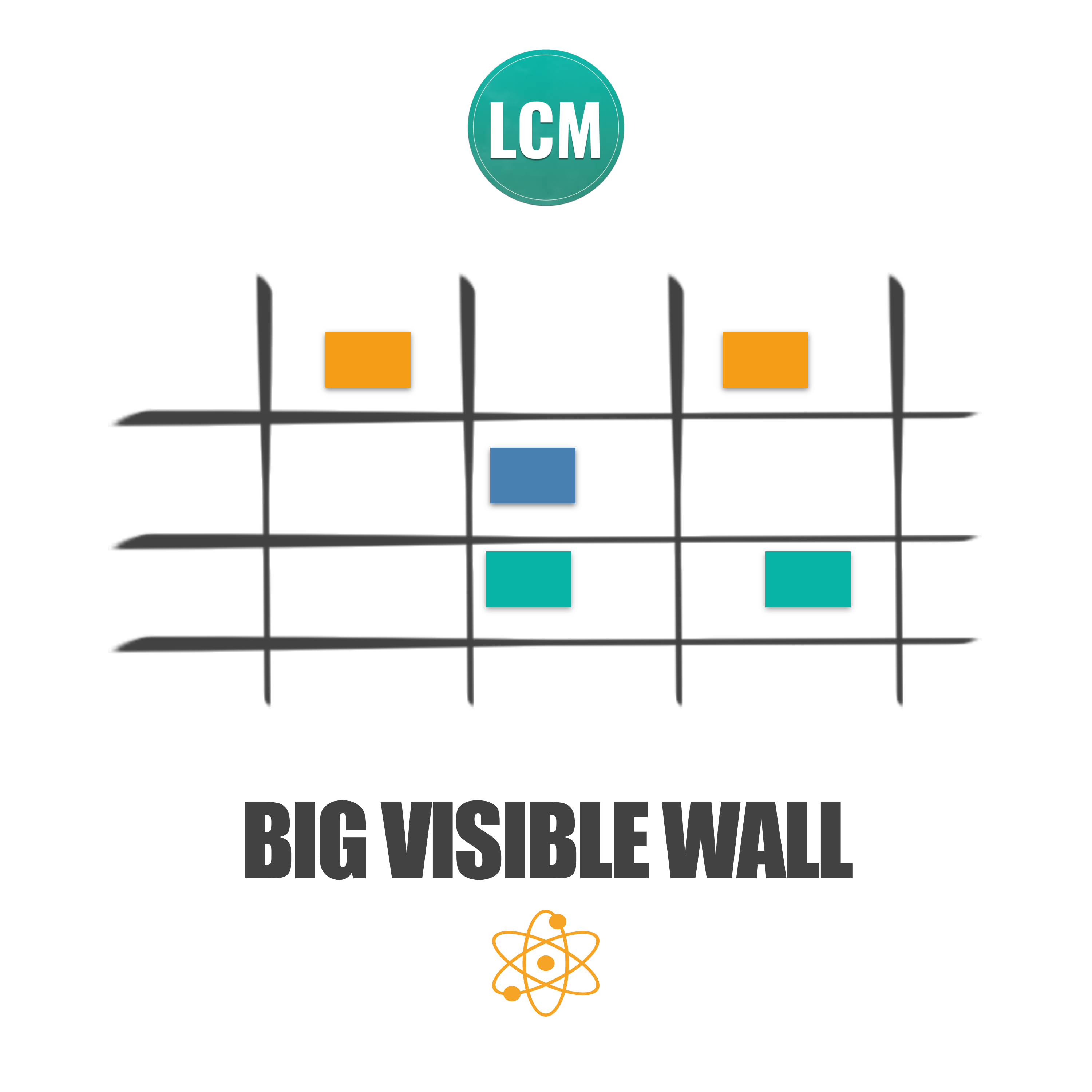 Tools & PracticesBig Visible Change Wall“If we made the change visible, we’d find problems sooner.”
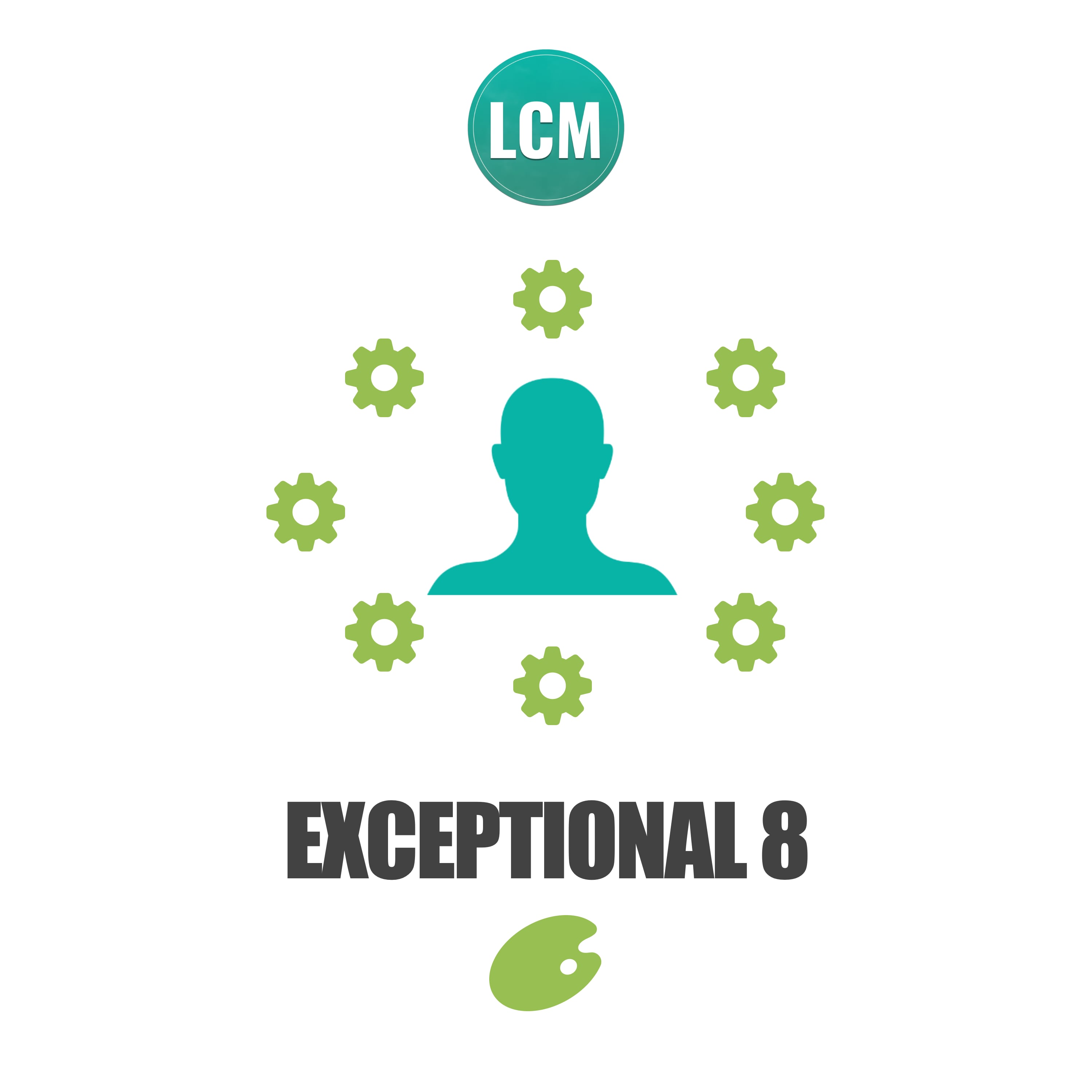 SelfExceptional 8“Some stakeholders want solutions, not problems. I might need to be a little more courageous.”
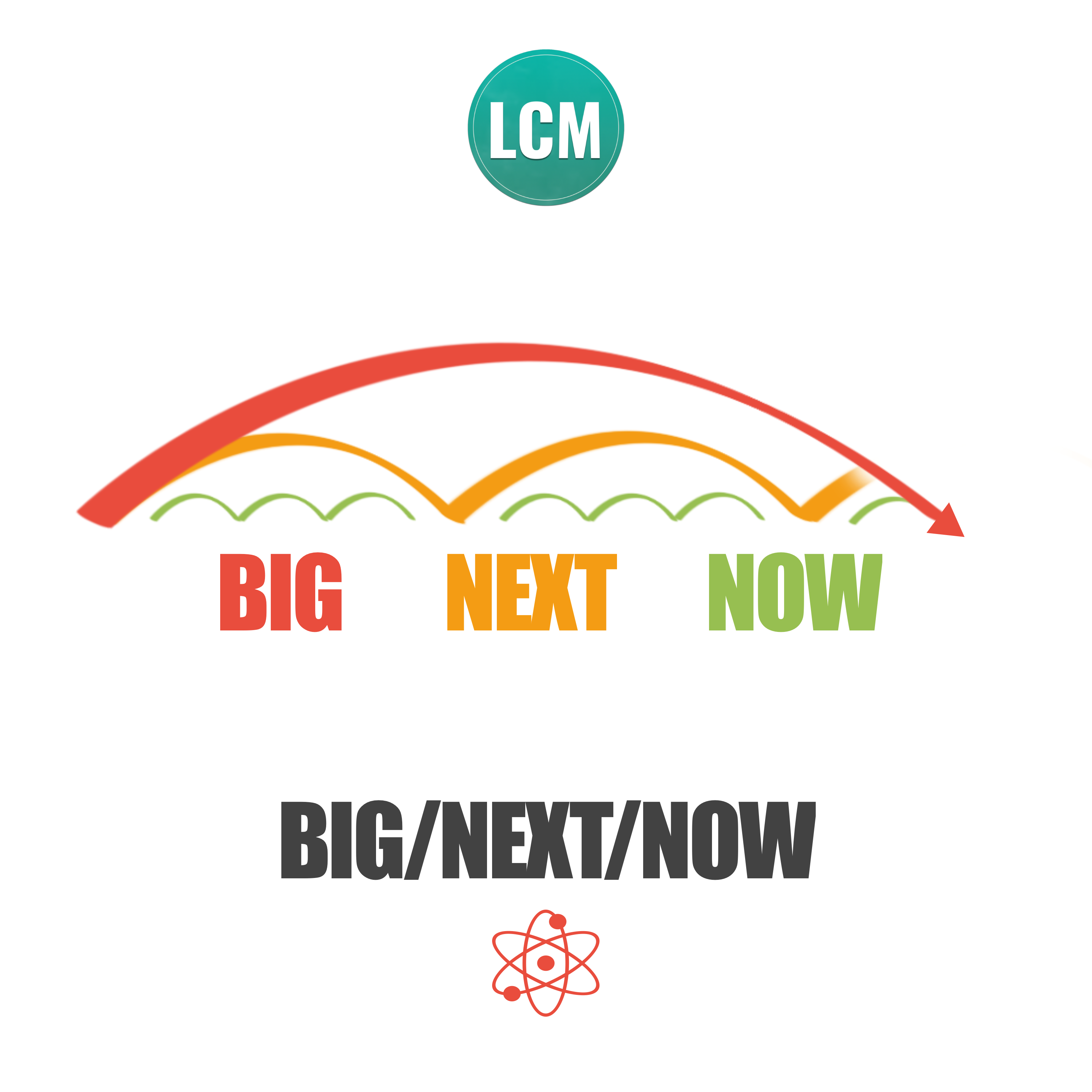 Big IdeasBIG/NEXT/NOW“Perhaps we’re planning too far ahead.”
4 · Act on it
Plan a shorter horizon, put the work on a wall, run small experiments — and raise problems early, even when it’s uncomfortable.
Each Dimension gives you a different way into the same problem.
Together, they help you build your own approach to change — one that fits your context, not someone else's framework — and put it to work in the Lean Change Engine.
Real-world case study
A practitioner’s story — when the client needed a coach, not a change manager
I’d just started with a client, and the initiative was already moving fast. I was moving fast too — setting up processes and baselines, delivering communications, building alignment. Solid change management work.
The business lead told me he was thinking of bringing in another change practitioner — not to replace me, but because she had great conversations with him about leadership. I realized he needed a coach, and shifted my stance on the spot. No one else was brought in, and our relationship grew from there.
What I was doing
Moving fast on the core change work — processes, baselines, context, communications, alignment.
The signal
“Do you know Michelle? I think I’ll bring her in — she has really good conversations with me about leadership.”
The shift
From change manager and doer to coach — before the conversation had even ended.
What happened
No extra support brought in. Trust grew, and we worked really well together.
I’d just started working with a client, alongside the business lead who was really driving the initiative. By the time I arrived, everything was already moving quickly — so I moved quickly too. I was establishing processes and baselines, getting to grips with the context, delivering communications and building alignment. The tactical and strategic work you’d expect from change management, and the artifacts that go with it.
One day the lead asked me, “Do you know Michelle?” (Not her real name.) Michelle was another change practitioner working in the same space, and I’d worked with her before — we got on well. I said I did, and asked why.
“I think I’m going to bring her into the project,” he said. “Not to replace you — you’re still the lead. But she does something a lot of people don’t. She has really good conversations with me about leadership, and they help me.”
In that moment I realized what the context was telling me: my client didn’t just need a change manager. He needed a coach. I didn’t wait until the end of the conversation — I shifted my stance right there, from manager and doer to coach, and asked him why he thought those conversations were so important.
From then on, I held that stance every time we met.
Stance is one of the Four Dimensions. The core stances come from the same library as the elements on this page.
They never brought in any additional support, because I was able to give him what he needed. Trust grew, the relationship deepened, and we worked really well together.
Be ready to shift your stance day to day — even moment to moment within a conversation — by recognizing what the system needs and pulling from your kit to deliver it. That’s agility: delivering what the system needs, at the right time, in the right place. Miss it, and you frustrate the system — in this case, one that needed a coach, not a manager.
Training & certification
Learn how to apply the Lean Change Operating System to real-world change initiatives by enrolling in one of our training programs. More than a certification course, it's an immersive learning experience designed to transform how you think about, design, and lead change in complex environments.
Whether you're new to Lean Change or looking to become a certified practitioner, you'll gain practical tools, proven practices, and the confidence to continuously sense, learn, and adapt as change unfolds.