Vortex of Behavioral Patterns
Organizations stay stuck in the status quo due to organizational gravity, which pulls them back to familiar behaviors. Breaking free requires leaders to evolve and embrace systemic, collective, and personal change.
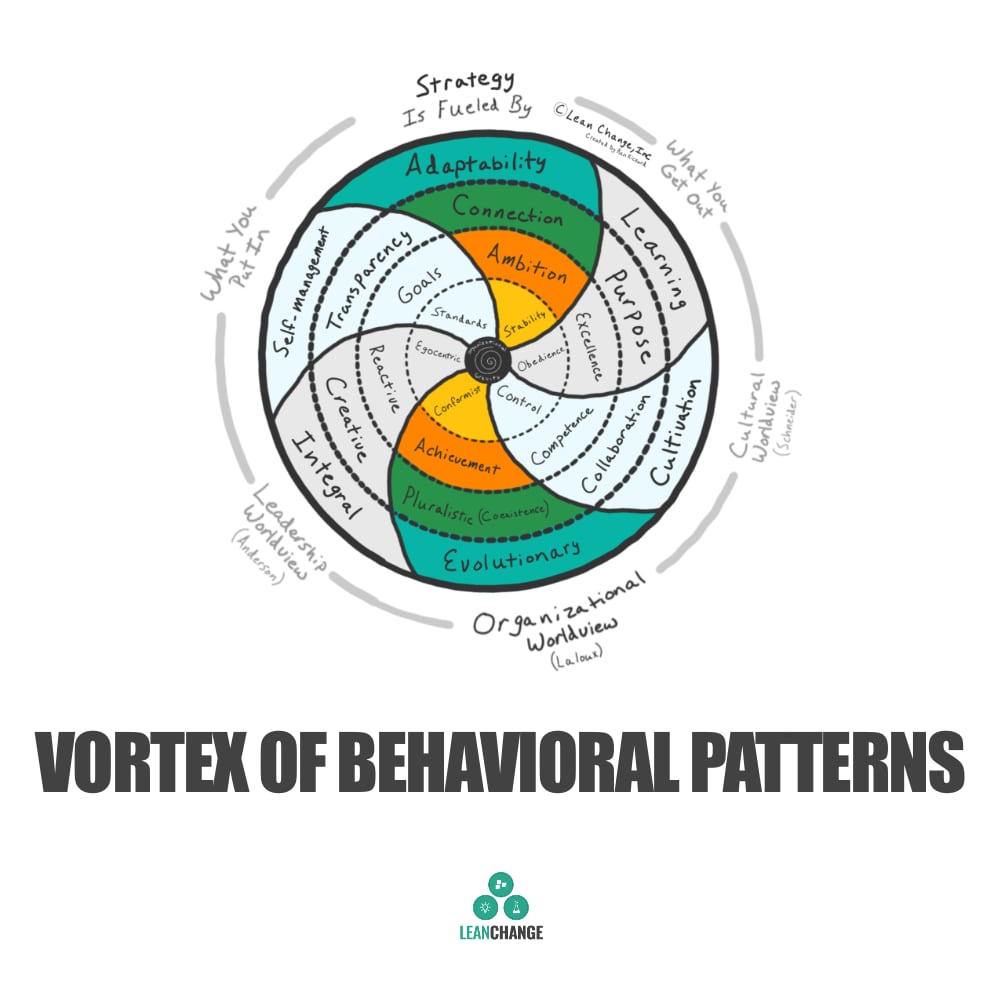
Vortex of Behavioral Patterns vs traditional thinking
Two different assumptions about how change should work.
Lean Change
Organizational culture emerges from the interactions between people in the system. It's messy, unpredictable and cannot be controlled.
Traditional Change Management
We change the culture by assessing the current state, create a set of targeted behaviours and measure towards it.
The Vortex of Behavioral Patterns explains why organizations often struggle to achieve true transformation despite ongoing change efforts. At its core is organizational gravity —the powerful force of ingrained norms, behaviors, and mindsets that continually pulls organizations back to the comfort of the status quo. Thi...
Members see the deeper working notes
Sign in to read the full detailed content, relationship notes, and the richer context around how this element is applied.
Connections to the broader Lean Change ecosystem.
Sign in to see curated resources, tools, and deeper ecosystem connections for this element.
Join / sign in →