How Systems Shift
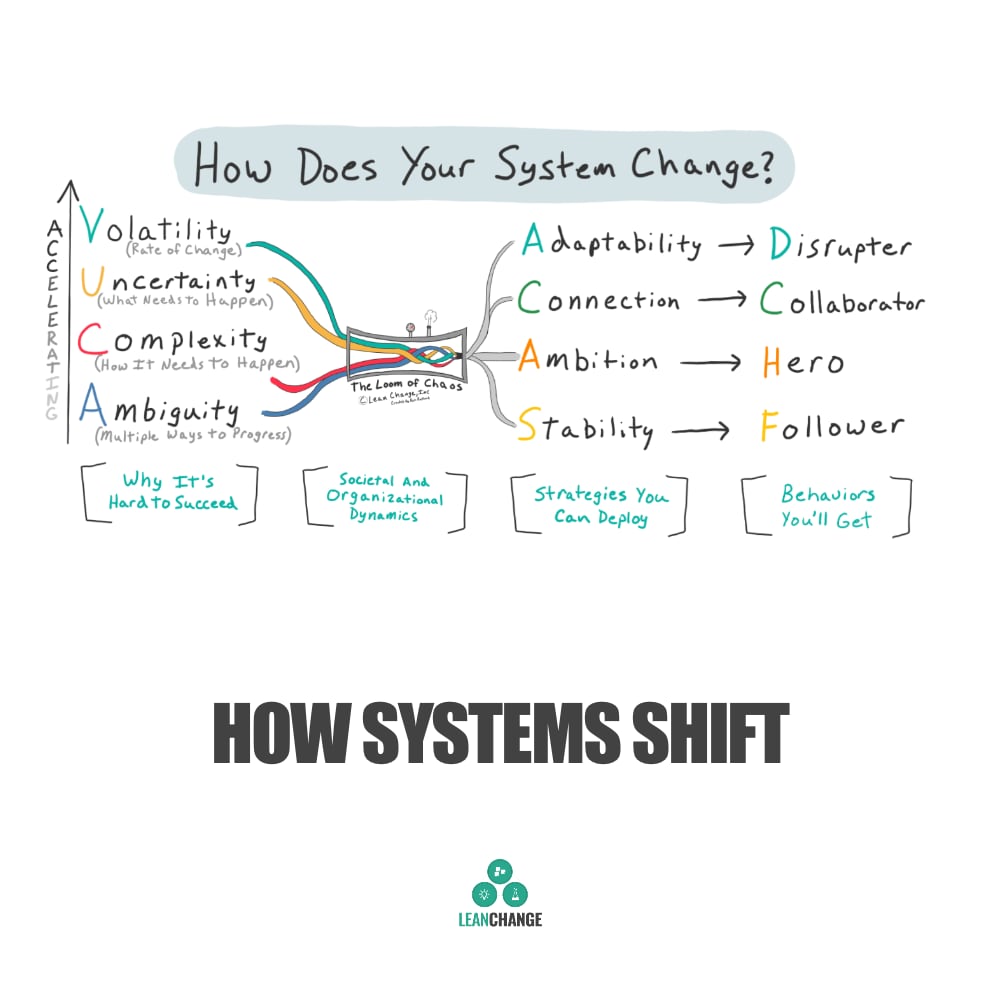
Change doesn’t enter your system through strategy decks or all-hands meetings. It emerges through the interaction of beliefs, behaviors, relationships, and structures over time. This model helps you see those patterns—and nudge them.
How Systems Shift vs traditional thinking
Two different assumptions about how change should work.
Lean Change
Change is emergent. Systems shift when people, ideas, relationships, and tensions interact. Lasting change comes from sensing patterns, probing gently, and adapting based on what unfolds—not from top-down declarations.
Traditional Change Management
Change is engineered. You define a future state, create a roadmap, and manage resistance along the way. If it doesn’t work, the assumption is poor execution or lack of buy-in—not a mismatch with how systems actually evolve.
The System Shift model helps us understand how change actually happens—not how we wish it would. In most organizations, change is treated as a linear sequence: decide → plan → communicate → implement → measure. But real change is nonlinear, messy, and filled with feedback loops.This model invites you to step back and a...
Members see the deeper working notes
Sign in to read the full detailed content, relationship notes, and the richer context around how this element is applied.
Connections to the broader Lean Change ecosystem.
No related elements have been published for this one yet.
Sign in to see curated resources, tools, and deeper ecosystem connections for this element.
Join / sign in →