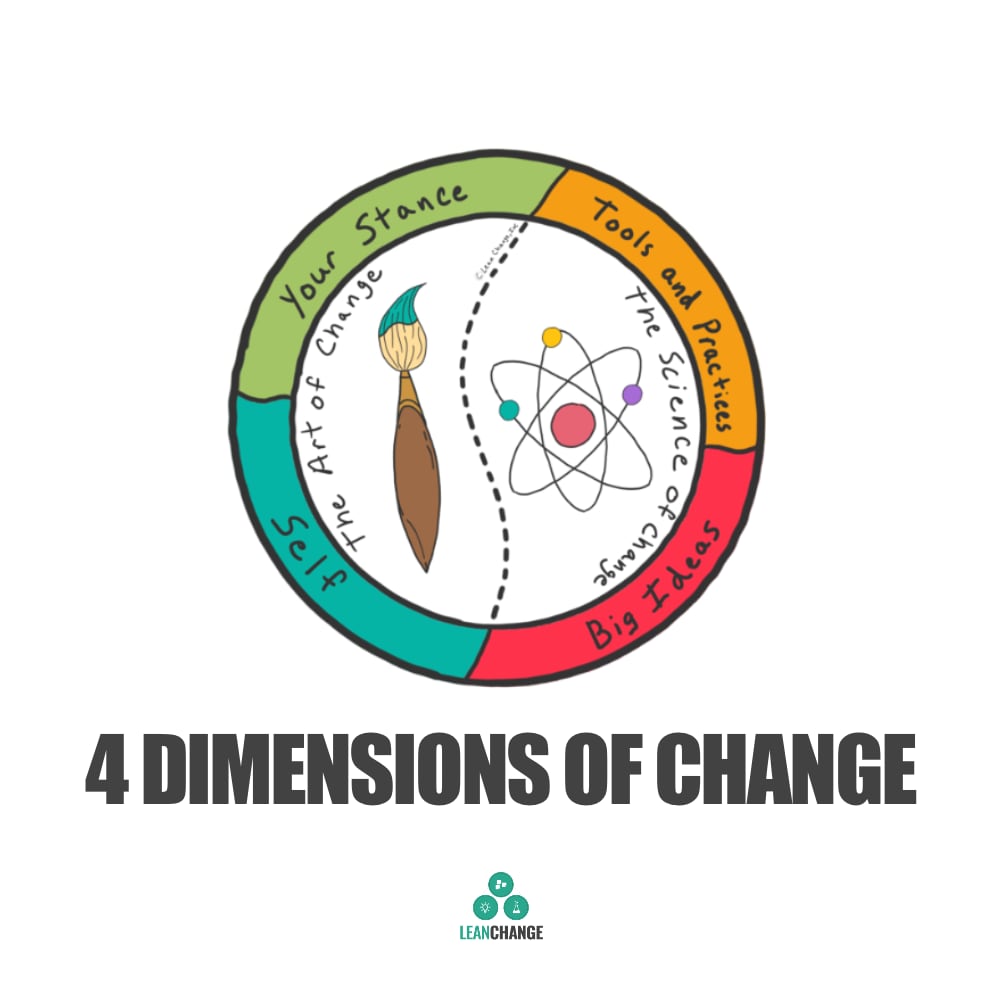
4 Dimensions of Change
The 4 Dimensions of Change emphasize the importance of personal development, the stance one takes in driving change, the mental models used to understand change, and the practical tools and practices employed. This model balances the human aspects of change with effective methodologies to achieve impactful results.
4 Dimensions of Change vs traditional thinking
Two different assumptions about how change should work.
Lean Change
Change management is the balance of art and science. Who you are and the stance you take are equally, if not more, important than the ideas and tools you use.
Traditional Change Management
Change should be a repeatable, standardized process that ensures successful outcomes.
What separates organizations that are good at change from those that suck at it?Our brains desperately want change to be a repeatable process based on science. But it's not. Change is as much art as it is science. Throughout his travels, he discovered that organizations that excelled at change knew how to balance the a...
Members see the deeper working notes
Sign in to read the full detailed content, relationship notes, and the richer context around how this element is applied.
Connections to the broader Lean Change ecosystem.
No related elements have been published for this one yet.
Sign in to see curated resources, tools, and deeper ecosystem connections for this element.
Join / sign in →