5 Waves of Transformative Change
The 5 Waves of Transformational Change outline the stages an organization goes through during a transformation. These stages start with superficial changes and progress to deeper, more reflective changes. By recognizing these stages, organizations can better navigate the complexities of change and achieve sustainable transformation.
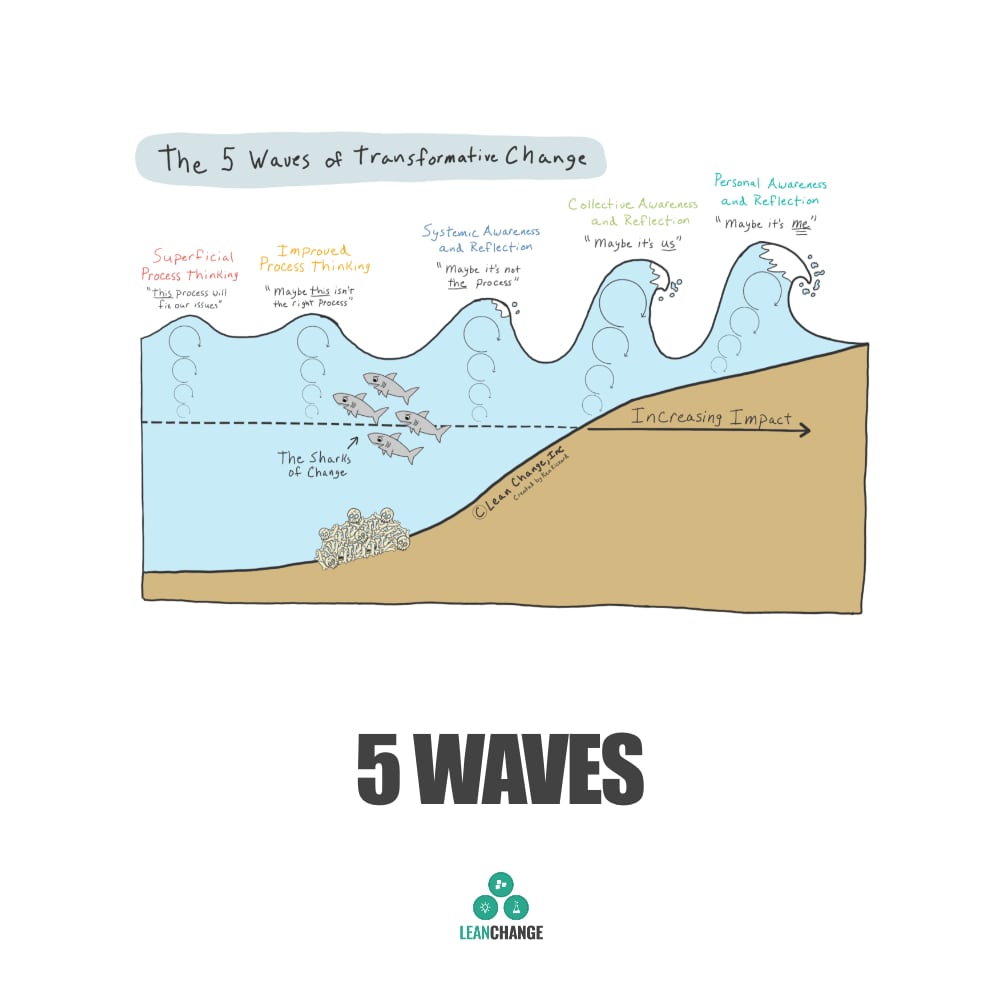
5 Waves of Transformative Change vs traditional thinking
Two different assumptions about how change should work.
Lean Change
The 5 Waves of Transformational Change offer a progressive roadmap for understanding and navigating the stages of change. This modern approach helps organizations move from superficial improvements to deep, reflective transformation, allowing for a more thoughtful and adaptive change process that builds on learning and reflection at each stage.
Traditional Change Management
Traditional change management often views change as a linear, predictable process. This perspective can lead to rigid planning and execution, failing to accommodate the complexity and non-linearity of real-world change. As a result, organizations may struggle to achieve deep, meaningful transformation and adapt effectively over time.
In the journey of organizational transformation, it is essential to recognize that change is not a linear process but a complex and evolving one. The 5 Waves of Transformational Change provide a framework to understand and navigate the stages that organizations typically go through during a transformation. These stages...
Members see the deeper working notes
Sign in to read the full detailed content, relationship notes, and the richer context around how this element is applied.
Connections to the broader Lean Change ecosystem.
Sign in to see curated resources, tools, and deeper ecosystem connections for this element.
Join / sign in →