4 Minds of Change Leadership
Every leader wears multiple hats, but few recognize which "mind" they're leading from. The 4 Minds of Leadership help leaders make sense of how they show up—and how that shapes the system around them.
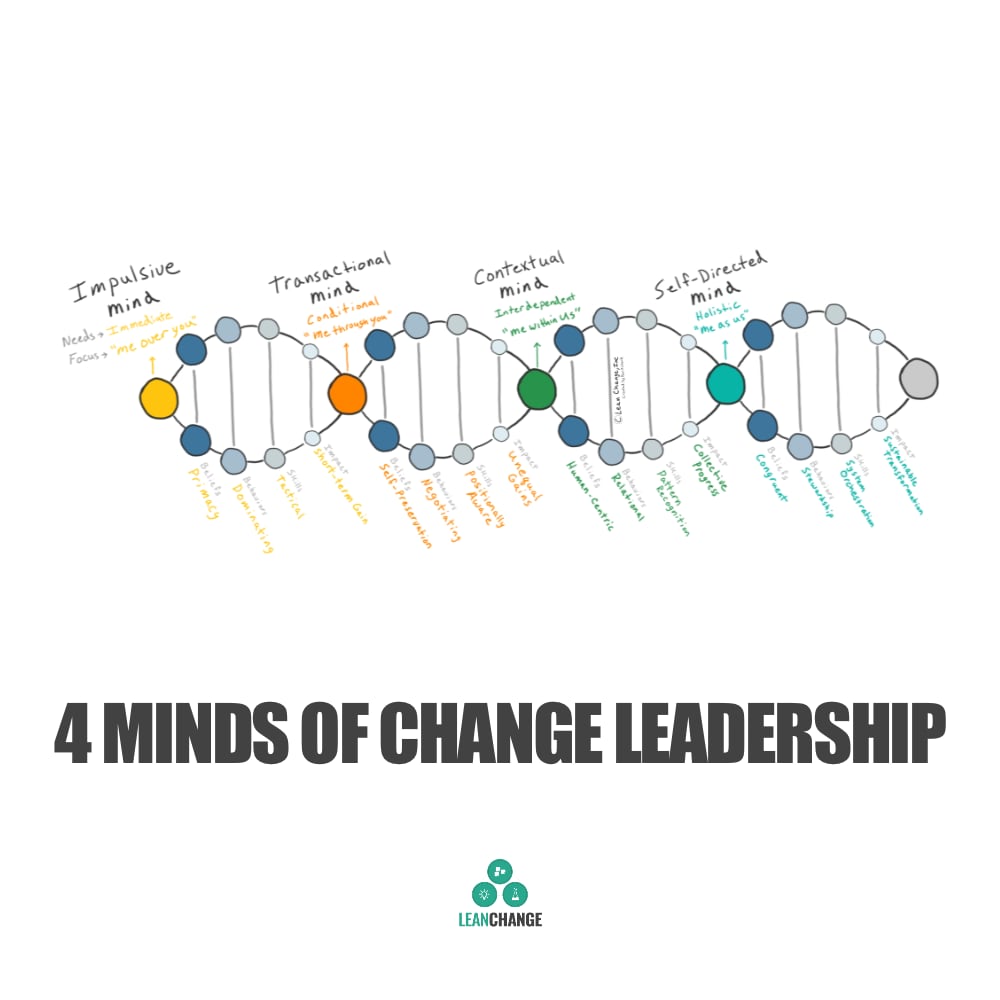
4 Minds of Change Leadership vs traditional thinking
Two different assumptions about how change should work.
Lean Change
Leadership isn’t a title—it’s a function of how you respond to complexity. The 4 Minds reveal how leaders can intentionally switch lenses to match context, not control it. It’s about sensing, not certainty.
Traditional Change Management
Leadership is often viewed as a role of authority and decision-making. It emphasizes consistency, control, and execution—expecting leaders to always have the answer, rather than adapt their stance.
The 4 Minds of Leadership model helps leaders explore the stance they’re taking in a given moment—not to label themselves, but to notice what their leadership is enabling or constraining.Each “mind” represents a lens through which a leader can operate: • Expert Mind – grounded in knowledge, authority, and past experien...
Members see the deeper working notes
Sign in to read the full detailed content, relationship notes, and the richer context around how this element is applied.
Connections to the broader Lean Change ecosystem.
No related elements have been published for this one yet.
Sign in to see curated resources, tools, and deeper ecosystem connections for this element.
Join / sign in →