5 Universals of Change
The 5 Universals of Change focus on 5 patterns that guide effective change: aligning people around a common purpose, fostering meaningful dialogue, co-creating solutions, encouraging experimentation, and responding to change constructively. These principles help create a more inclusive and adaptive change process.
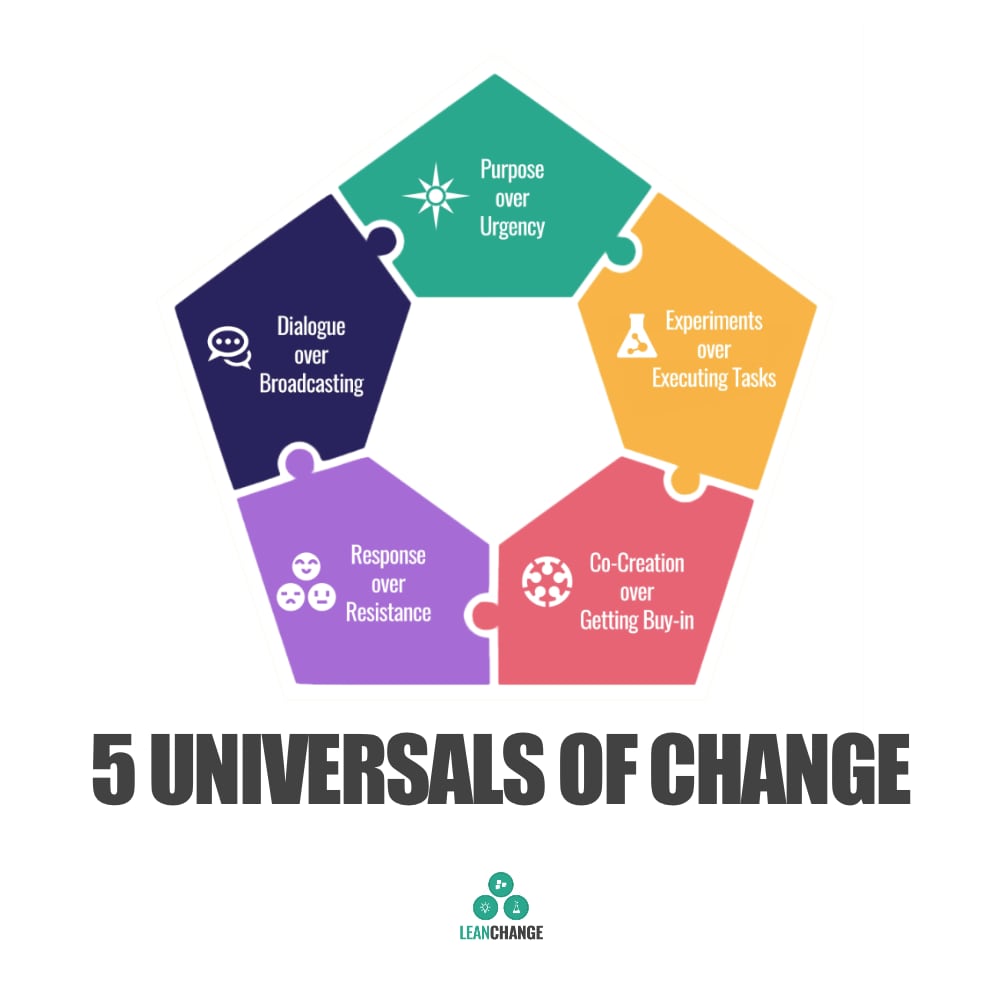
5 Universals of Change vs traditional thinking
Two different assumptions about how change should work.
Lean Change
Change management is a servant role. We co-create the plan and build the right change in the right way at the right time with the people affected. We don't accept uncertainty, we work on managing and reducing it by using modern approaches to change.
Traditional Change Management
Change Management is as a control position. We create the plan. We sell the plan. We overcome the resistance. We are responsible for ensuring successful outcomes.
Theory We live in a colourful world, not a black and white one. The best change agents know how to balance the art and science of change so they can intervene in the organizational system in the right way, at the right time. The 5 Universals of Change are universals patterns that help change agents balance a push-and-p...
Members see the deeper working notes
Sign in to read the full detailed content, relationship notes, and the richer context around how this element is applied.
Child Developments
Related child elements that expand this building block.
We believe in experimenting our way through change over executing tasks in a plan
We believe in enabling meaningful dialogue over broadcasting information at people
We believe in understanding the response to change over blaming people for resisting.
Connections to the broader Lean Change ecosystem.
Sign in to see curated resources, tools, and deeper ecosystem connections for this element.
Join / sign in →