3 Approaches to Change
Not all change is the same. These three approaches—Optimization, Evolution, and Adaptation—help you match your strategy to the complexity of your situation, instead of forcing everything through a one-size-fits-all model.
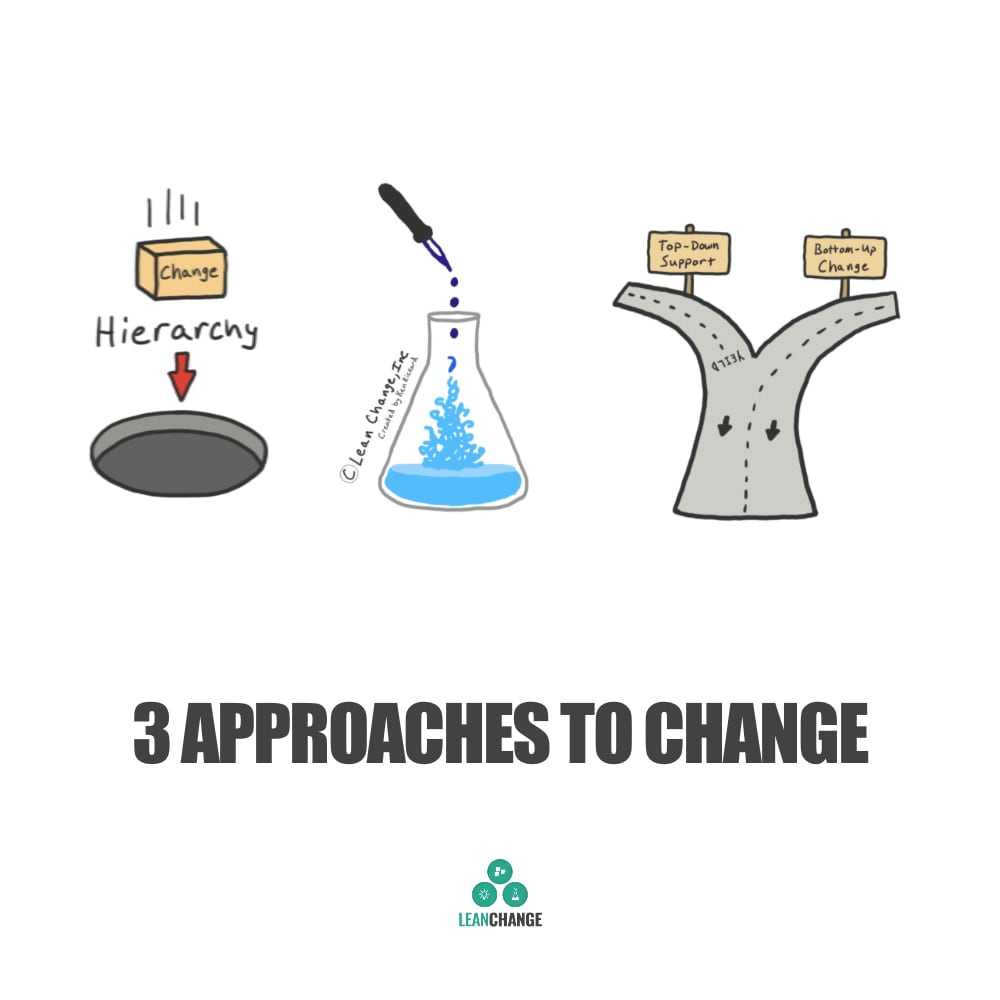
3 Approaches to Change vs traditional thinking
Two different assumptions about how change should work.
Lean Change
Change isn't something to control—it’s something to navigate. These approaches are lenses, not phases. You can use them to understand what kind of change you’re facing and respond appropriately.
Traditional Change Management
Change is often treated as a linear journey from current state to future state, with a standardized process applied regardless of the situation. Deviations are treated as resistance or failure to follow the plan.
The 3 Approaches to Change model helps you identify what kind of change your system needs—not what a framework tells you to do. Each approach brings its own mindset, methods, and risks: • Optimization : This is about improving what already exists—refining processes, removing inefficiencies, and increasing performance....
Members see the deeper working notes
Sign in to read the full detailed content, relationship notes, and the richer context around how this element is applied.
Child Developments
Related child elements that expand this building block.
When change is co-created, it spreads organically like dropping coloured dye into water.
When change is dropped through the hole in the floor, we are naturally put into a position to push change.
Connections to the broader Lean Change ecosystem.
No related elements have been published for this one yet.
Sign in to see curated resources, tools, and deeper ecosystem connections for this element.
Join / sign in →