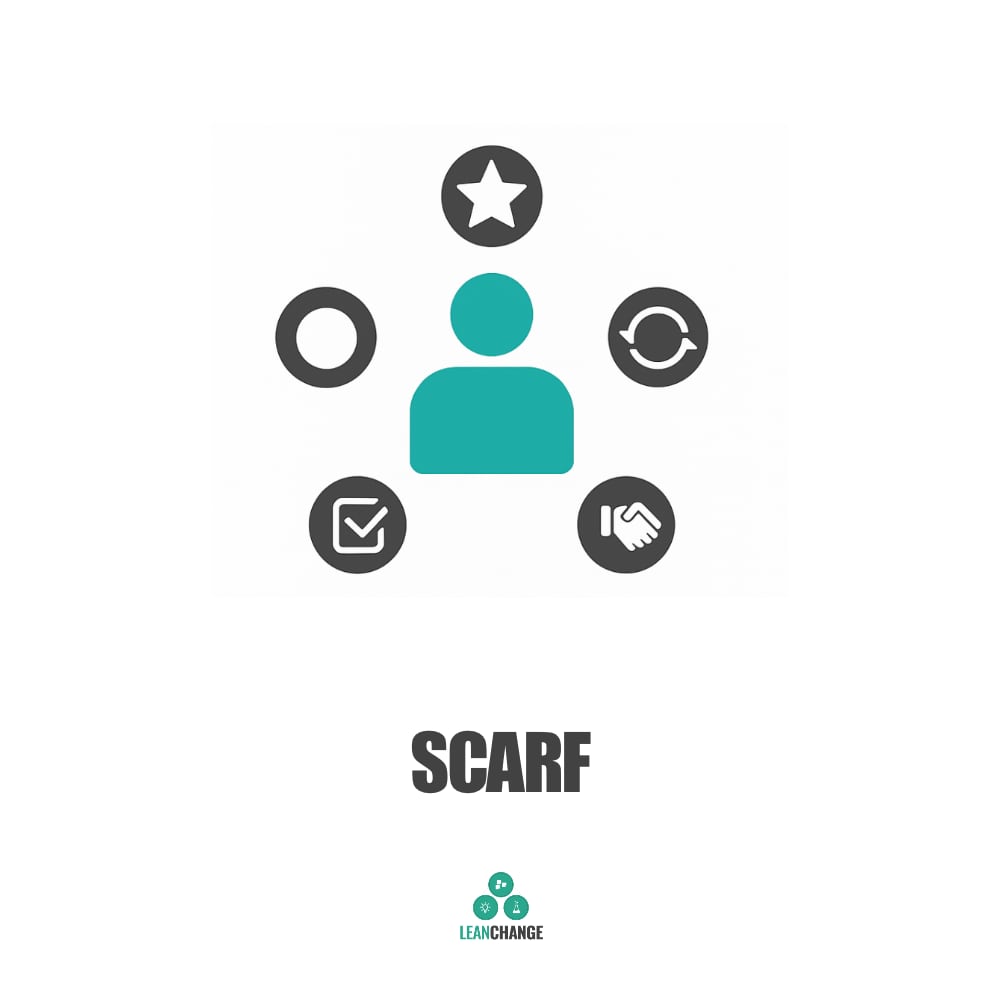
SCARF
To help change agents understand and anticipate how people respond to change on a social and neurological level. SCARF is a practical framework for identifying emotional triggers during change—so you can reduce perceived threats and increase engagement.
SCARF vs traditional thinking
Two different assumptions about how change should work.
Lean Change
Lean Change uses SCARF to get underneath surface behavior and create safer, smarter interventions. It’s not about manipulating—it's about respecting how the brain experiences change.
Traditional Change Management
Traditional change might miss the emotional dimension or try to manage resistance via logic.
The SCARF Model was developed in 2008 by David Rock, in his paper "SCARF: A Brain-Based Model for Collaborating With and Influencing Others." SCARF stands for the five key "domains" that influence our behavior in social situations. These are: • Status – our relative importance to others. • Certainty – our ability to...
Members see the deeper working notes
Sign in to read the full detailed content, relationship notes, and the richer context around how this element is applied.
Connections to the broader Lean Change ecosystem.
Sign in to see curated resources, tools, and deeper ecosystem connections for this element.
Join / sign in →