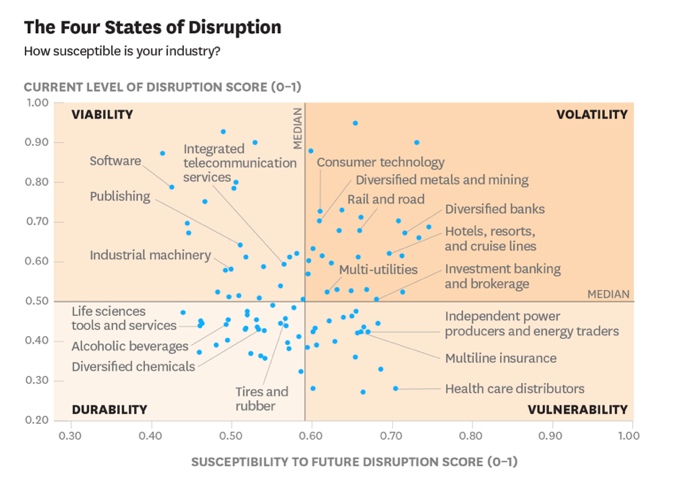
Call it digital disruption, call it the symptom of living in a VUCA world, call it what you will, but the odds are pretty good your industry is going to be disrupted. The Agile and Change communities try to use this as a fear-tactic to sell you a method, or certification or what-have-you.
Yes, that's cynical...but here's the thing: What else do we need to know about change that hasn't already been invented and talked about ad nauseam?
- Herb Kelleher, the former CEO of Southwest Airlines, famously said in an interview, in the context of being a leader, "be humble, work harder than anyone else; serve your people" His leadership style arguably created the environment for the man who saved Southwest Airlines to do what he did.
- Alan Mulally arguably turned around Ford by implementing a daily standup to talk about blocks and risks with the global department heads.
- Peter Aceto tells fantastic stories about how Tangerine built the culture they have in his book Weology.
Skip reading and listen to my Inside Launchstreet interview with Tamara Kleinberg (iTunes | stitcher )
The Process View
If you're someone who usually takes a process view, that is believing everything is a process, at Southwest you'll see that the 10-minute turnaround indeed was, and still is, a process. The counter-argument I have is that it's unlikely that Herb came to his people and said "please provide me with a process strategy document to solve this problem" given how he talks in this interview. In the case of Ford, yes a weekly standup meeting is a process, but how it came to be, and more importantly why it came to be, happened in a natural way. Here's an excerpt from Alan's interview with MIT: “It was such a natural thing for me to include everybody because that’s what you have to do if you’re going to change the world with a new product,” he told me. “It was really important that we had everybody on the team, the leaders around the world, the skills teams around the world, and that we – together – unite around the vision, the strategy, the implementation plan.” His weekly meeting offered the ideal forum, where Mulally fostered a safe, open, encouraging and respectful environment. “Every week, we worked it [the strategy and the plan] together, helping each other turn the reds to yellows to greens.”
In his book Weology, Peter tells a story about having his Tangerine card declined at a restaurant. His wife calls the helpdesk, and they can't solve the problem directly. Peter brings that problem back and tells the team that front-line customers should be able to fix that AND we should try to prevent that call. Long story short, they fixed it twice. They created a way for fraud protection to notify customers if their card was disabled and he said ~85% of the time, customers called immediately and rarely ran into a situation of being at the checkout and having their card declined.
The Human View
In all of these examples, these leaders created environments for their people to do the right thing. They didn't approach these problems by creating processes from a centralized group or team. The people in the middle and the bottom of the company made these decisions.
5 Tips for Finding Influencers
What happens when your leaders don't have the same relatable skills as Herb, Alan or Peter?
- find people with large internal networks
- find people who've worked with, or interacted with, many different departments
- find people who are fun to be around!
- connect with co-workers on social media to learn more about them
- bring meetups into your office and see who sticks around

Title image attribution: https://hbr.org/2018/01/how-likely-is-your-industry-to-be-disrupted-this-2x2-matrix-will-tell-you
Start the conversation