
Last week at Lean Change Agent in Hamburg one of the participants suggested dedicating a portion of the class for people to introduce ideas and models they've found helpful when it comes to leading change. Stefan Haas presented how he uses the Value Proposition Canvas and that quickly evolved into a discussion about how you could use this tool as a way to collect Insights about the change you're trying to implement. We quickly moved into a conversation about transformation versus change. We're at the proverbial changing of the guard in our organizations. The previous generation of leaders are retiring and global competition is driving organizations that still use archaic management practices into extinction. I think these are the primary causes behind the rising popularity of 'transformation'. Unfortunately most of my experience has shown me that organizations aren't interested in transforming because they don't truly understand what it means.
Value Proposition Canvas
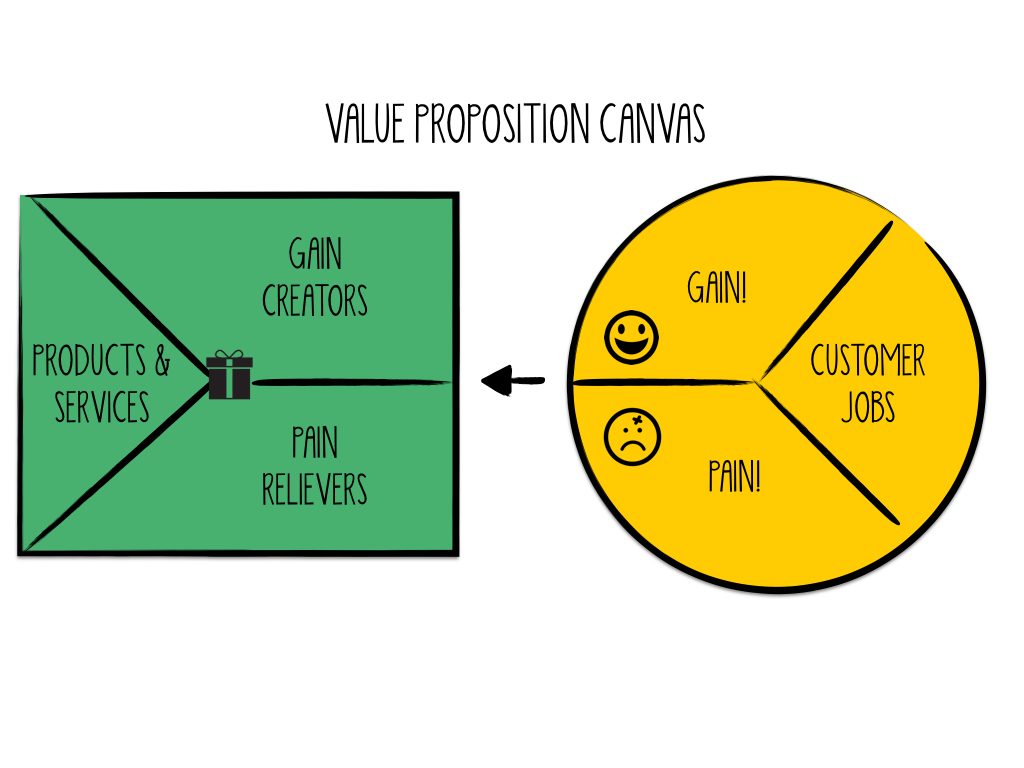
Adapting the VPC to Lean Change Management
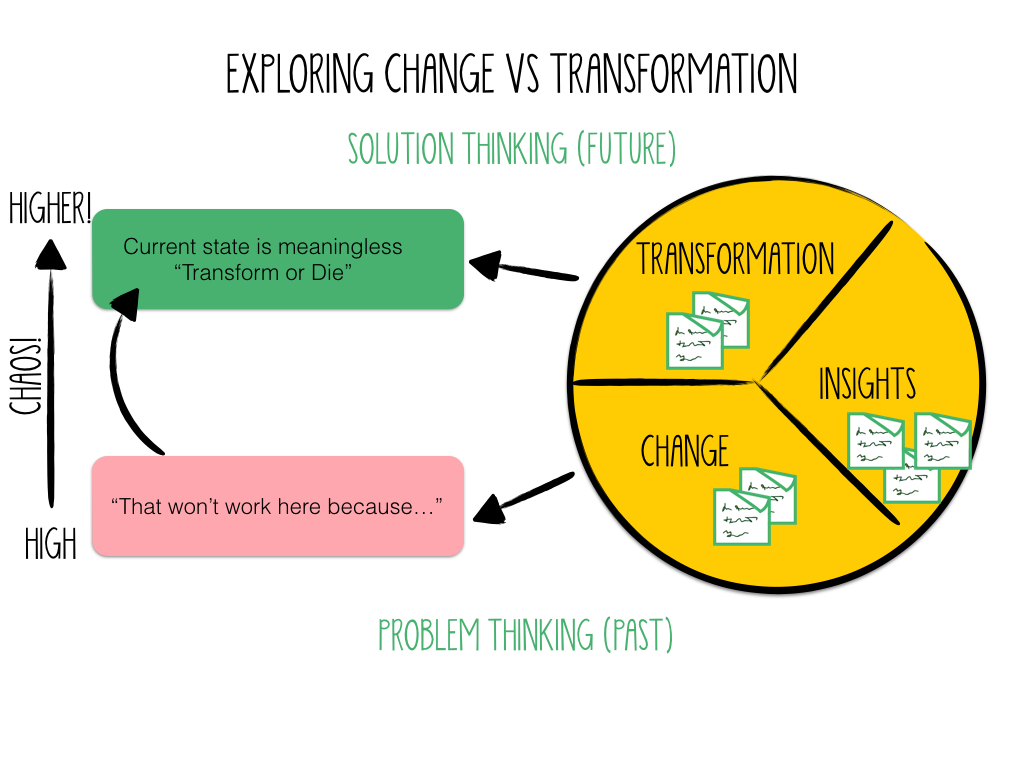
- current state doesn't matter, pursuit of the future state does.
- organizational commitment to change everything about how the organization operates.
- requires extremely strong commitment and realization that current organizational goals will not be achieved in favour of dedicating time for transformation to happen.
Incremental Change: Past-Thinking
- "but that won't work here"
- "we're special...we're different...shut up consultant, you just don't understand...."
- focuses on root cause analysis, process change
- increases friction when some interconnected parts of the organization are changing and others are not
The most important aspect of applying this technique is to explain the difference between transformation and incremental change to leadership teams. Then they have the choice. Transform or change. Stefan experimented with applying the VPC to change recently at #dtcamp14 and wrote about his experience here.
Start the conversation