
This is an analysis and summary of an article originally posted on MIT Sloan Management Review
Three key take-aways from the research
-
Flattening a hierarchy reshapes who stays more than who arrives.
Removing a management layer nudged the remaining workforce toward higher conscientiousness, agreeableness, and openness, but overall qualification levels did not budge. The shift was driven almost entirely by voluntary attrition of employees who disliked the new autonomy, not by an influx of new hires. -
Outcomes hinge on how you de-layer.
A bank that piloted agile teams and had CEO-CIO sponsorship saw the “good” personality mix and skill depth rise. A payment processor that executed a rapid, CIO-only rollout lost experts and saw desirable traits drop. Prior experimentation and top-team alignment were decisive. -
Structure, strategy, and people decisions must be co-designed.
Because different employees thrive under different structures, CHROs need a front-row seat when CEOs and COOs redraw org charts. Tailored recruiting, role redesign, and feedback loops are required to lock in the talent advantages a flatter structure can offer.
Flattening a hierarchy does more than streamline reporting lines: it quietly reshapes who stays and who leaves. Using 20 years of LinkedIn data on 5,500 U.S. financial-services firms that removed management layers, plus two deep-dive case studies, the authors show how workforce personality makeup shifts—and why leadership and HR must anticipate the ripple effects.
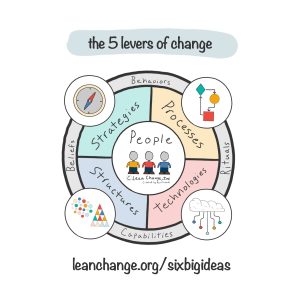
We often start from wanting to change mindsets and culture, perhaps this article and research settles the debate that culture always follows structure? Structure is a doorway, not a destination. Real transformation happens when all five levers are thoughtfully coordinated to support the change — and each other.
The Long-Term Affect of Pulling the 'Structure' Lever
People is in the middle of the 5 Levers by design. MIT shows the ripples creates by starting with structural change.
| After de-layering | Change vs. prior year | Why it matters |
|---|---|---|
| Conscientiousness ? 2.0% | Self-starters thrive when managers can no longer micromanage. | Self-starters thrive when managers can no longer micromanage. A more conscientious crew also lowers coordination overhead because people finish tasks on time and surface blockers early. |
| Agreeableness ? 3.6% | Teams need collaborators willing to do unglamorous support work. | Teams need collaborators willing to do unglamorous support work. Their cooperative mindset dampens conflict and raises psychological safety, which keeps autonomous teams from fragmenting. |
| Openness ? 3.4% | Adaptive, idea-seeking employees handle the autonomy of flatter structures. | Adaptive, idea-seeking employees handle the autonomy of flatter structures. Their curiosity fuels lateral idea-sharing, turning a de-layered org into a quicker incubator for innovation. |
| Skill level | No significant change | Talent doesn’t automatically get “better”; structure mostly affects who stays. |
| Driver of change | Attrition, not hiring | Employees who dislike the new setup leave; outsiders don’t yet “feel” the structure. |
Two contrasting case studies
| Bank holding company (scaled-agile roll-out) | Payment processor (rapid agile roll-out) |
|---|---|
| Gradual pilots, CEO + CIO sponsorship | Big-bang launch, CIO-led |
| Traits & skills rose (conscientious, agreeable, open, extraverted; higher tech skills via targeted hiring) | Traits & skills fell (experts felt sidelined, conscientious high-performers quit) |
| Visible showcases for coder achievements kept high achievers engaged | Little spotlight for specialists ? loss of “go-to” experts |
Lesson: The same structural recipe can yield opposite talent outcomes depending on experimentation history and C-suite coordination.
Implications for leaders
-
Bring HR in early. CHROs should co-design the restructure, map desired capabilities, and run targeted recruiting to complement inevitable attrition.
-
Redesign roles, not just charts. Stripped-down middle-manager slots can morph into valued specialist or coach roles—if COOs and CHROs plan for it.
-
Swap micromanagement for guardrails. Flatter orgs still need clear workflows, conflict-resolution paths, and visible recognition so autonomous teams don’t drift or lose motivation.
-
Monitor talent signals post-change. Tracking personality-trait mix (or proxies such as engagement surveys) a year out can reveal whether the new structure is attracting or repelling the people you need.
Bottom line: Structure doesn’t just follow strategy—people follow structure. Flatten wisely, or the very talent you hoped to unleash may walk out the door.
Three Lean Change Management moves leaders can make right now
| Lean Change idea | Why it tackles the article’s pitfalls | Quick “how-to” |
|---|---|---|
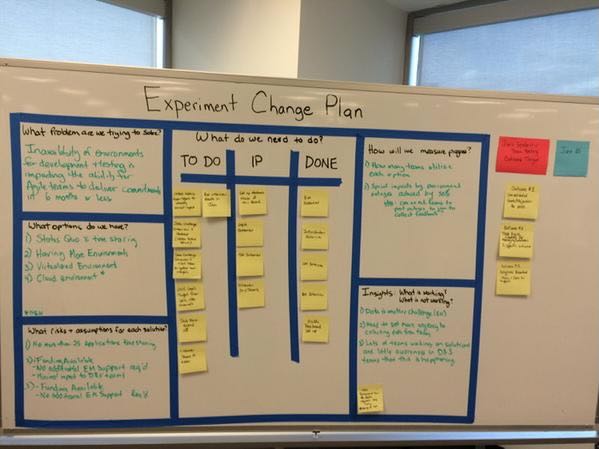
| Run a Minimum Viable Structure experiment before a full de-layering | The research shows that outcomes diverge wildly when companies jump in without prior learning (case #2). LCM treats change like product development: test small, learn fast, scale what works. | 1. Pick one business unit. |
| 2. Map its current layers on a Change Canvas and write the hypothesis: “If we remove one layer, voluntary turnover of high performers will drop by X%.” | ||
| 3. Limit the test to 90 days, define three success metrics (e.g., autonomy scores, time-to-decision, retention), and review with the team in a Sprint Retro. | ||
| Use Change Personas to design role pathways, not just org charts | Attrition—not hiring—drove the workforce shift. Personas help you understand what different archetypes (the expert coder, the team glue, the emerging leader) need to stay engaged when titles disappear. | 1. With HR, build 3–5 personas from interviews and trait data (Big-Five proxies, engagement surveys). |
| 2. Co-create a Personal Alignment Canvas for each: preferred autonomy level, recognition triggers, growth options. | ||
| 3. Craft role redesigns or specialist tracks that let each persona thrive in the flatter setup. | ||
| Install rapid feedback loops with a Change Dashboard | The article urges leaders to monitor post-change signals (conscientiousness, openness, engagement). Lean Change formalizes this as continuous sense-and-respond instead of “launch and forget.” | 1. Visualize real-time metrics (turnover by trait cluster, psychological safety pulse, project lead-time) on a shared dashboard. |
| 2. Hold bi-weekly Change Reviews: teams share what’s working, what friction emerged, and propose the next experiment. | ||
| 3. Treat every adjustment as a new card on your Experiment Backlog—keeping the transformation living, not static. |
Bottom line: Treat flattening the hierarchy like any other complex change—iterate, empathize with the humans inside the boxes, and keep a tight feedback cadence. Lean Change’s lightweight canvases and experiment mindset give leaders the scaffolding they need to avoid “big-bang” misfires and retain the conscientious, open, and agreeable talent a flatter organization relies on.
Start the conversation