
We keep hearing that the pace of change is increasing, but I disagree. I think priorities are changing more often and our organizational structures prevent us from adapting quickly.
[embed]https://www.youtube.com/watch?v=LFN5AIUTdIo\[/embed\]
1. Start with Small, Cross-Functional Wins
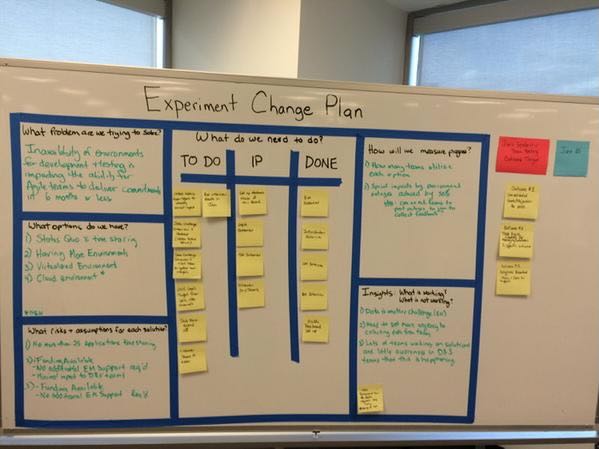
Introduce safe-to-fail experiments that involve stakeholders from multiple silos. Choose initiatives that provide immediate value and require collaboration, such as a shared process improvement or cross-departmental problem-solving exercise.
Why it works: This builds relationships across silos and demonstrates the benefits of collaboration without threatening existing structures?.
Example: Use a Kanban board to track interdepartmental work, visualizing dependencies and bottlenecks.
2. Leverage Storytelling to Challenge Mindsets
Use narratives and analogies to illustrate the limitations of silos and waterfall thinking. Highlight success stories from other organizations or departments that embraced iterative approaches or system-wide thinking??.
Why it works: Stories bypass resistance by connecting emotionally, making complex ideas relatable and compelling.
3. Focus on Shared Goals, Not Structures
Reframe the conversation around shared organizational goals, such as customer satisfaction or time-to-market, that transcend silo boundaries. Introduce systems mapping exercises to visualize how each department contributes to these goals??.
Why it works: It shifts the focus from protecting silos to achieving outcomes that matter to everyone.
Example: A cross-silo initiative to improve order fulfillment times, linking marketing, sales, and operations.
4. Introduce Iterative Thinking Through Experiments
Break large, waterfall-style projects into smaller, testable chunks. Frame these as opportunities to learn rather than initiatives to succeed or fail?.
Why it works: Iterative approaches ease operational teams into new ways of working without directly confronting entrenched habits.
Example: Instead of a year-long system overhaul, run a 3-month pilot in one business unit, focusing on lessons learned.
5. Use Feedback Loops to Build Momentum
Create mechanisms for feedback and adaptation, such as retrospectives or customer feedback sessions. Celebrate small wins and highlight how iterative practices enhance outcomes??.
Why it works: Tangible results from iterative changes demonstrate the value of moving away from siloed, waterfall thinking.
Bottom Line: Change Starts Where You Are
Begin with what’s within your control at the operational level. Build cross-silo collaboration incrementally, focus on shared goals, and let small successes serve as a proof of concept to influence management.
? Bonus Tip: Engage management by framing these changes as enhancements to existing structures, not a replacement for them. This minimizes perceived threats and opens the door for broader change.
Learn more about how to manage organizational complexity with our Systems & Complexity workshop!
- This post was partially created using AI.

Start the conversation