
"If you want to make architecture rather than just a building, you have 3 choices: hire an architect, become an architect or learn to think like an architect." - Hal Box, from the book, Think Like an Architect. My 9 year old loves skyscrapers and over the weekend we stumbled across an interesting read about the Intempo Skyscraper that was plagued with design and architecture problems. The building was originally intended to have 20 floors but during construction, the developers changed the plan to 47 floors. Unfortunately, the architecture and design wasn't updated to reflect what would actually be needed to accommodate this. As a result, there was no space for the additional elevators to get people to the top! Architecture is a fixture of software development and building construction and there are severe impacts to both when architecture is forgotten in favour of getting real work done. But what about change? Many of today's change models focus on executing linear processes in order to install change in an organization. If we only follow these best practices from <insert big consulting firm, or popular process model here> we'll be successful! In the book Think Like an Architect, the author describes in 13 chapters how one can learn to, well, think like an architect. From exploring other buildings to visualizing architecture with drawings and actual building work, architecture is happening constantly. With organizational change, using these ideas is a little bit different so we can remove a few of those chapters and focus on what's relevant for change architects. 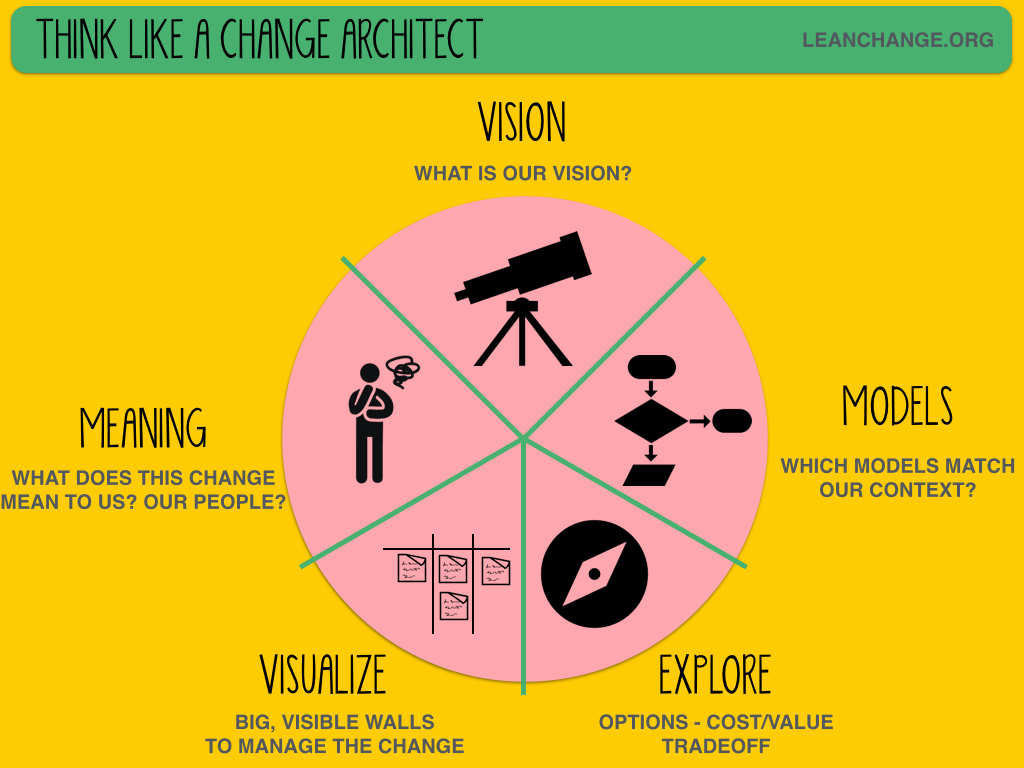
author
Start the conversation