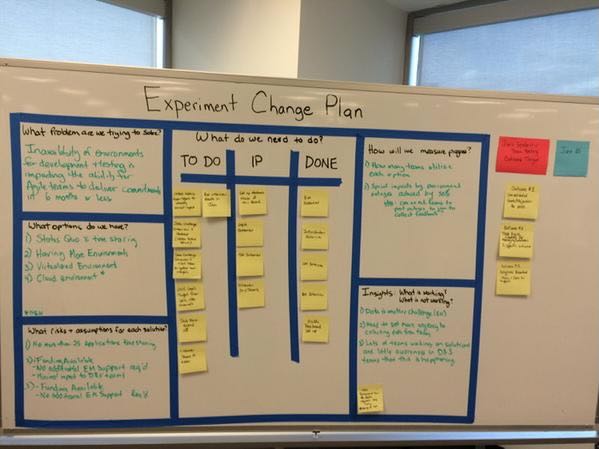
One of the people in this week's Lean Change Agent workshop in Perth asked a great question about using Lean Coffee to create open dialogue about a change initiative. The question was: "Does the time come when it stops being useful and you stop doing it?" At the time I thought it was an interesting question but now that I've had some time to chew on it a bit, I had an 'aha!' moment. I pick on the 70% stat and change resistant a lot. Deservedly so. It's time to start picking on my 3rd most loathed topic: Sustainable change. Changes have a shelf-life. A successful change isn't one that is sustained, it's one that has served its purpose. That purpose might have been to help people figure out what the change means to them, or to accomplish a quick win, or meet a short-term objective or to figure out what change to do next. Then it's done. It's gone the way of the dodo and it's time to move on to the next change...err...Experiment.
The Shelf-Life of a Change
Continue reading
Three related dispatchesAgile Change Management: An Adaptable Approach to Managing Change
Prosci adapted ADKAR to work inside agile. Lean Change Management was built from agile principles. Here's why that distinction matters for change practitioners.
Lean Change Management vs Prosci ADKAR – Modern Change Management Explained.
Prosci’s “Lean Change + ADKAR” article ranks well but conflates process Lean with Lean Change. This post sets the record straight: Lean Change is a feedback-driven, co-created way to evolve systems through small, testable experiments—not a linear adoption model. We show where their mapping misleads, when ADKAR can be a useful diagnostic (not the backbone), and how to run real experiments that beat change theatre.
How Lean Change Can Help You "De-Layer" Your Organization
Flattening your org chart? A 20-year study of 5,500 finance firms shows that shedding a management layer leaves you with a workforce that’s more conscientious, agreeable, and open—because autonomy-averse staff exit. Pilot-led, C-suite-backed shifts keep top talent; big-bang rollouts leak it. Remember: structure shapes retention.
Start the conversation