
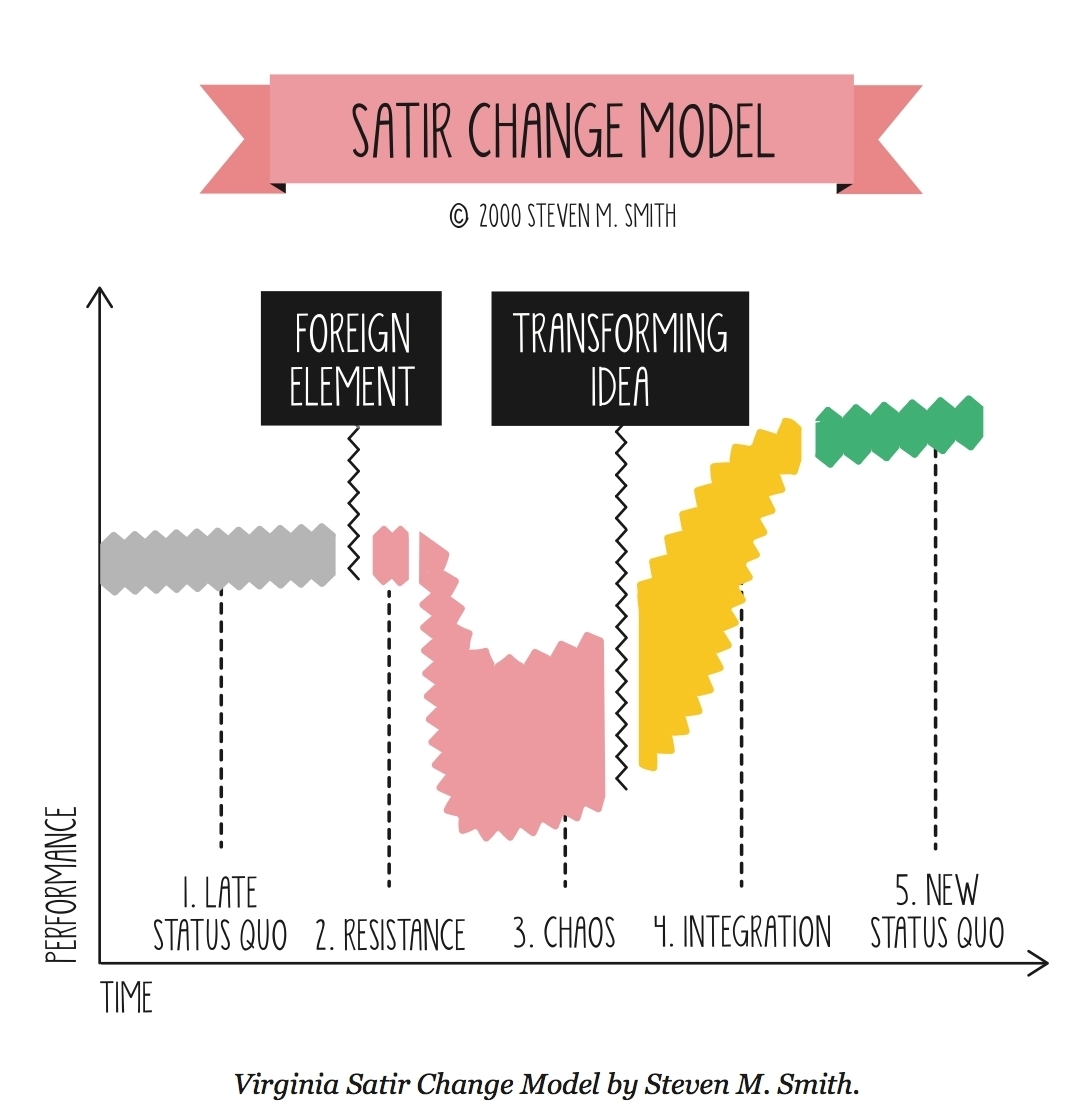
Implementing agile in an organization could be a very hard and complicated thing and it could become even harder especially if you are impatient to see the anticipated benefits. It’s common said that it is very easy to start with agile and to my experience and observations it is even easier to fall back to old ways of doing things – maybe renamed – when you realize that you are in the middle of chaos! Is there any way to have a successful agile change that serves its purpose? The answer is yes and Jason Little describe that way in his book “Lean Change Management” which is an excellent resource with concrete practices, that could help any agile change agent to be good at change! Recently i had a great challenge to train a big project team in agile methodologies, that came as their need to handle a very complex product with high uncertainty in what to do and how to do it! I’ve seen this challenge as from the very beginning as a change rather than as a conventional two days training and i thought that it was a great opportunity to experiment with the Lean Change management approach! As Jason suggests in his book, a Lean Change cycle starts with gathering insights about the current state of the organization. There are multiple ways and models that could help someone to do that and i found really challenging to experiment with a retrospective based on Virginia’s Satir change model as one of the method i’ve used to gather insights.

Late Status Quo, “everything being familiar and in balance” What was working well? What was making you feel comfortable in that state? Foreign Element, Resistance, Chaos, “sudden realization that things have been very unhealthy” Which are your main concerns related to this change? Which are the main obstacles that restrain you to get the benefit of this change? Transforming Idea, “AHA!..i learned something!” Which are the forces that driving this change? Which are the benefits you have seen so far? What are you willing to do in order to make the change work? What will you need to do differently? What support do you need for me? New Status Quo, “everything being familiar and in balance” What is your VISION, your new target position with respect to this change? How will we measure success New Status Quo
The amount of generated insights was impressive! Project team members came to a conclusion that maybe the foreign element that triggered their comfort zone was the project complexity and it was less related to their agile implementation. For sure agile surfaced even more dysfunctions that there was need to handle. However they have started seeing it as the transforming idea, the vehicle and not the impediment to succeed with their project and get out of the chaos. They were expressing some of benefits they had seen so far form their agile implementation, while reflecting on things that they need to change or challenge for themselves. It was also useful that the main barriers related to their change, like management support, product roadmap, team structure were highlighted. It was also interesting that participants thought about their new status quo and what they need to do in order to reach their wanted position. This helped the project team to co-create a list of options (second step on the Lean Change management) that they could work further depending on the value they will get compared to the effort or cost they need to invest as suggested in Lean Change Management. If i could sum-up the whole approach we have used to generate insights in a few words i would choose awareness, alignment and co-creation! and IMHO i believe that are important pillars for any change to happen! Concluding, start gathering insights is the first step in Lean Change and to my experience the Satir Change model could be a really helpful way to generate them! To move forward and support any change to serve it’s purpose you just need a few more steps. Apart from insights, you need options, make a lot of experiments, learn, reflect, run more, start anew!
Would you like to be good at change? I would suggest to learn about the Lean Change Management approach and try it!
Start the conversation