
I was working as an agile coach in an enterprise organization where my team was helping in internal agile transformation team shift of the company delivered products. Where do you start when you're trying to change system with over 10,000 people in it?
It’s easy to say things like:
- just tell people the why!
- we need to experiment!
- we need to embrace uncertainty!”
Those sound nice on the outside, but we have a better idea:
Disrupt the organizational patterns that led to the transformation being needed in the first place.
Here are three actionable strategies we used to manage complexity and start meaningful change in a system this large:
1. Don’t Add More Communication—Create Meaningful Dialogue
One of the most common transformation traps is trying to “fix” communication gaps by simply adding more communication: more emails, meetings, or reports. This can actually make the situation worse, overwhelming people without addressing their real concerns.
Instead, focus on creating spaces for meaningful dialogue. Ask open-ended questions that uncover what’s really going on:
- What are people’s biggest fears about this change?
- What’s preventing them from feeling confident in moving forward?
- What would success look like to them?
You can disrupt this pattern by using Lean Coffee.
2. Look for Feedback Loops, Not Single Causes
In a system with 10,000 people, resistance to change often isn’t a one-off problem; it’s a sign of feedback loops within the system. For example, a culture of micromanagement might reinforce bottlenecks in decision-making, which then amplifies resistance when change is introduced.
To make progress, stop looking for single root causes and start mapping out these loops. A simple systems mapping exercise can help:
- Identify key relationships between people, processes, and decisions.
- Explore how these interactions reinforce the current state.
- Look for leverage points—small changes that could have outsized impacts.
In a different organization, I was asked to present "agile utopia" to the executive team. Instead of doing that I brought feedback from the teams and the manager is based on their experiences with agile. The executive team was, to be brutally honest, a little pissed off at first, but it led to much better conversations based on feedback from the organization about how the agile transformation was going. We had a great discussion and out of that came three experiments to work on for the next month.
3. Start Small and Experiment
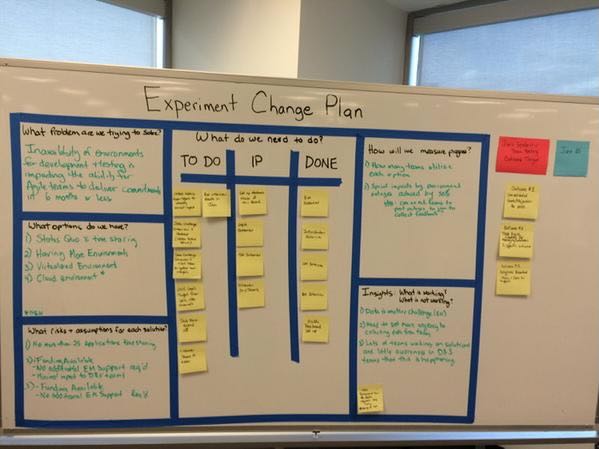
Large-scale systems resist big, sweeping plans. In fact, introducing too much change at once can destabilize the system and create new resistance. Instead, focus on small, safe-to-fail experiments that let you learn and adapt as you go.
For example, we piloted new delivery processes with one team, using their feedback to refine our approach before scaling. This allowed us to test assumptions, gain quick wins, and build momentum—all without overwhelming the organization. The key message here was to find the line that allowed teams to have the freedom to customize the process to suit their needs instead of mandating a prescriptive process. As project complexity, and program size grew, teams needed to make more compromises, but for smaller projects, and teams, they have complete freedom to optimize however necessary.
When you treat interventions as experiments rather than solutions, you leave room for flexibility and iteration. Over time, this approach helps you adapt to the complexity of the system rather than trying to impose control.
Disrupting the Patterns That Hold Systems in Place
The key takeaway? If you’re trying to change a system of 10,000 people, you can’t simply tweak the surface-level processes. You need to disrupt the organizational patterns that created the need for transformation in the first place.
By fostering meaningful dialogue, analyzing feedback loops, and taking an experimental approach, you can intervene in ways that align with the complexity of the system—and start driving change that sticks.
Want to dive deeper into navigating complexity and driving change in dynamic environments? Sign up for the waiting list for our upcoming course: Systems Thinking and Complexity for Change Leaders.

Start the conversation